 ← Back to the blog
Tokenized Gaming: What It Means and Why It Matters
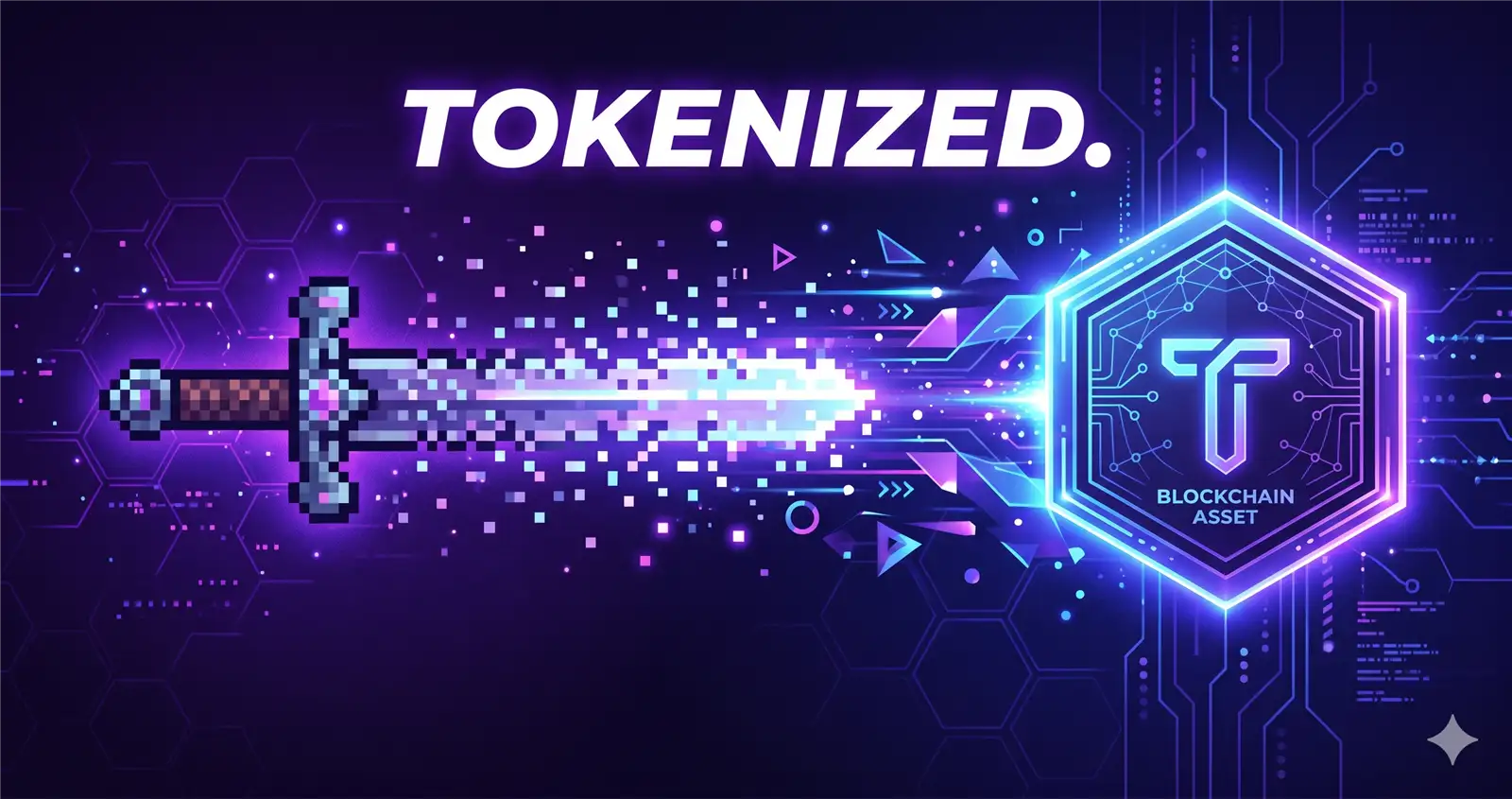
Tokenized gaming is the practice of representing in-game assets as blockchain tokens. A sword, a character, a piece of virtual land, a unit of in-game currency: each becomes a verifiable digital asset that a player holds in a wallet rather than in a game studio’s database.
Tokenization is the technical act that makes Web3 gaming possible. Without it, players have accounts. With it, players have ownership.
What you'll learn
- Token supply caps are enforced in smart contracts and publicly verifiable. Studios cannot quietly mint more of a rare item.
- Secondary market royalties let studios capture value from player-to-player trades that traditional games lose entirely.
- Changing tokenomics after launch is technically possible but almost always damages player trust in practice.
- EU studios need a CASP licence or a licensed platform layer to legally operate a tokenized economy for EU players.
What tokenization means
In a traditional game, your assets are database records. The studio writes and reads them. You access them through your account. The studio controls them.
In a tokenized game, assets are onchain records. The blockchain writes and reads them. You access them through your wallet. No single party controls them.
The difference is meaningful in practical terms:
Portability. A tokenized item is not locked to one game’s servers. It can be transferred to any wallet, listed on any compatible marketplace, and in some cases used in any game that recognises the same asset standard.
Persistence. A database record disappears when the studio deletes it or shuts down the servers. A blockchain record persists as long as the chain runs. Game closures do not eliminate tokenized assets.
Secondary markets. Trading in traditional games is either prohibited by terms of service or funnelled through a single official marketplace. Tokenized assets can be traded on any compatible marketplace by their owner, without the studio’s involvement or fee capture.
Scarcity. Token supply is governed by smart contract logic. A studio cannot quietly print more of a rare item. The maximum supply is set in the contract and publicly verifiable.
Fungible and non-fungible tokens in games
Games use two types of tokens:
Fungible tokens (like ERC-20). Each unit is identical to every other unit. In-game currencies are typically fungible. One gold coin is the same as another. These can be accumulated, split, and spent freely.
Non-fungible tokens (NFTs, like ERC-721). Each is unique. A character, weapon, or piece of land with a specific set of attributes is a different NFT from every other. Non-fungibility is what makes collectibles, rare items, and character progression meaningful on a blockchain.
Most tokenized games use a combination: fungible tokens for everyday currency, NFTs for unique or limited-edition assets. That fungible/non-fungible split is the standard model for tokens for games today, not one asset type, but two working together.
Why studios tokenize game assets
The reasons vary, but the common ones. One design decision that shapes all of them: whether the token is scoped to a single game or shared across the studio’s whole portfolio.
Player ownership as a selling point. Some players prefer owning what they earn. Studios that offer genuine ownership can attract players who have been burned by traditional game asset policies (non-transferable, deletable on ban, lost on shutdown).
Native secondary markets. Traditional studios lose out on secondary market activity: players trade with each other and the studio sees none of it. With tokenized assets and a built-in marketplace, studios can charge a royalty on every secondary sale.
Token economies as game design. Fungible tokens that players earn, spend, burn, and trade can create richer game economies than static in-game currencies. Done well, player behaviour drives the economy in interesting ways.
Community ownership and governance. Token holders can participate in game governance: voting on development decisions, parameter changes, new content. This is more common in Web3-native projects than in traditional studios moving into Web3.
The economics of tokenized games
Token economics (tokenomics) is often where tokenized games succeed or fail.
Emission. How tokens enter circulation: through gameplay rewards, staking, crafting, or direct minting. High emission without matching demand inflates supply.
Sinks. Mechanisms that remove tokens from circulation: crafting costs, upgrade fees, entry fees, burning. Without effective sinks, even a popular game sees its token depreciate over time.
Supply caps. Maximum token supplies are set in the smart contract. For fungible tokens, the max supply is a key economic parameter. For NFTs, total edition size determines scarcity.
Utility. Tokens with genuine in-game utility (access to content, crafting ingredients, governance votes) hold value because they are needed, not just speculated on.
The best tokenized games are designed with token economics that balance these factors carefully from the start. Changing tokenomics after launch is technically possible but damages player trust.
What regulation applies to tokenized games
Tokenized games in the EU fall under MiCA (Markets in Crypto-Assets regulation) when they involve custodial wallets, NFT marketplaces with secondary trading, or fungible token transfers for EU players.
The practical implication: studios that want to serve EU players with tokenized economies need regulatory authorisation: specifically a CASP (Crypto-Asset Service Provider) licence, or need to build on a licensed platform that provides that authorisation at the infrastructure level.
Most studios building tokenized games cannot afford to obtain a CASP licence independently. The year-one cost runs €500,000 to €1,000,000. Genesis Engine is building the licensed infrastructure layer so developers can access compliant tokenized game mechanics without holding their own licence.
For players
If you are playing a tokenized game:
Understand what you are holding. Know whether your assets are fungible tokens, NFTs, or both. Understand the supply cap and the emission rate.
Check the secondary market. Is there active trading? At what prices? A liquid secondary market is a sign of a healthy economy. A market with no activity, or one dominated by bots, is a warning.
Know your tax position. Token earnings and gains from selling tokenized assets are taxable in most jurisdictions. Record transactions carefully.
Verify the smart contract. Is it audited? Is the audit public? Unaudited contracts handling player funds carry real risk.
FAQ
Is tokenized gaming the same as NFT gaming?
Closely related. NFT gaming usually refers to games where unique assets are represented as NFTs. Tokenized gaming is a broader term that includes both NFT assets and fungible token economies.
Can tokenized assets lose all their value?
Yes. Token values are market-driven. Assets that were worth significant amounts in 2021 are worth fractions of that now in many cases. Scarcity and utility help sustain value. Speculation alone does not.
Do all Web3 games use tokenization?
Most do in some form. The degree varies: some games tokenize everything, others only limited rare items.
Can I take tokenized game assets to another game?
Sometimes. Interoperability exists in some ecosystems but is far from universal. Assets from one game on the Immutable chain, for example, might be usable in other Immutable games if both developers have agreed to support shared standards. This is the exception, not the rule.
Is tokenization required for a game to be “Web3”?
In practice, yes. Tokenization is the mechanism that makes blockchain ownership real. Without it, a game might accept cryptocurrency payments but does not offer genuine asset ownership.
Genesis Engine supports tokenized game economies for developers building Web3 games for EU players. See how the platform works.
— Magnus
All posts